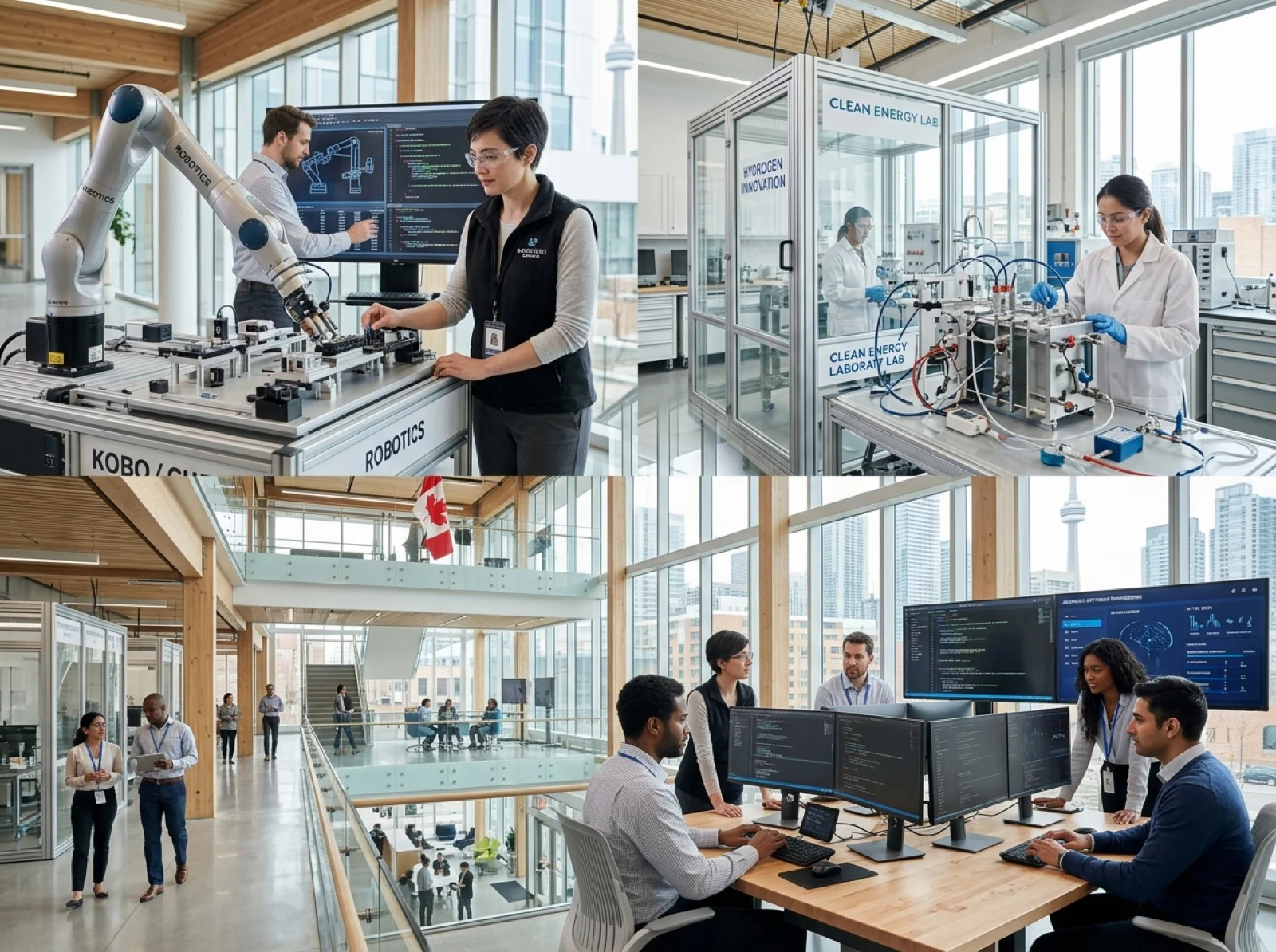
Funding programs are written for sectors, regions and activities. The same investment, such as a new production line or a software platform, can qualify under different programs depending on the industry, the province and the technical work involved. The sections below describe the questions that come up most often in each sector and link to the programs that usually apply.
Software and technology
Custom development, SaaS platforms, artificial intelligence and machine learning applications. The usual questions concern SR&ED, NRC IRAP and provincial tax credits for software development. The distinction that matters is between routine development and work that resolves technological uncertainty: only the latter qualifies for SR&ED. Companies building interactive products in Ontario may also look at the OIDMTC, and those hiring students at student wage subsidies.
Advanced manufacturing
Process innovation, automation and materials development. Equipment, productivity and workforce training projects raise questions about grants, contributions and financing. Larger projects often combine repayable contributions from regional development agencies with training grants and equipment financing. The guide to manufacturing grants in Canada explains how to sequence them.
Life sciences
Medical devices, pharmaceuticals and biotechnology research. Long development cycles make the coordination of tax credits and contributions particularly important. Research spending may qualify for SR&ED year after year, while facility and biomanufacturing projects in Ontario can be discussed with Invest Ontario. Regulatory and clinical work needs careful separation between eligible research and commercial activity.
Clean technology
Renewable energy, sustainability and environmental technology. Several federal and provincial programs explicitly target projects with environmental benefits. The clean technology grants page covers contribution programs, and the tax credits and incentives page covers investment tax credits for clean technology equipment.
Food and agriculture
Food processing, agricultural technology and nutritional science. Sector programs are listed in our food business funding guide, alongside the general measures. Processors investing in automation can often combine sector programs with provincial agri-food streams, general manufacturing support and export programs such as CanExport SMEs.
Aerospace and defence
Aviation systems, defence technologies and space technology. Industrial and Technological Benefits follow a procurement logic distinct from conventional grants: opportunities come from working with prime contractors that carry economic obligations in Canada. Research and development in the sector may still qualify for SR&ED and innovation programs.
Financial services
Financial technology, blockchain and payment systems. SR&ED and innovation programs apply where there is technological uncertainty. Much fintech work is integration or configuration, which usually does not qualify, so the technical narrative needs to identify the specific problems that standard practice could not solve.
Construction and engineering
Building technologies, civil engineering and materials. Equipment and workforce training investments are often the entry point. New materials or construction methods can raise SR&ED questions, while training for new equipment or processes may fit provincial training programs.
Film, media and creative industries
Productions and interactive media rely mainly on refundable tax credits. See film and television tax credits and the OIDMTC.
How sector affects the funding strategy
Three factors usually matter more than the industry label: the nature of the project (research, capital investment, hiring, training or export), the province and region where the work happens, and the size and ownership of the business. Many companies qualify under general programs as well as sector-specific ones. Starting with a clear project description, budget and timeline makes it possible to identify the programs that fit and the order in which to apply. The funding programs directory lists the main programs, and the regional guides cover Ontario, Quebec, Alberta and British Columbia.
Your sector is not listed?
Eligibility depends on the nature of the project, not the sector classification. Tell us what your business is preparing to do through the free assessment; we will establish which opportunities are worth a closer look.